Table Of Content
Red represents boldness and passion blue signifies trustworthiness and reliability yellow embodies optimism and energy while green represents growth and freshness. The introduction of the Google Doodle marked an important milestone in the logos evolution. Since 1998 these temporary variations have celebrated holidays, anniversaries and significant global events. This practice demonstrates that Google is more, than a search engine; it is a platform that acknowledges and celebrates global diversity and history.
Google Logo Design – History, Meaning and Evolution
This new name, derived from the mathematical term "googol" (a one followed by a hundred zeros), symbolized the company's ambition to organize the vast universe of information. Google Doodles have become an essential part of the company's brand identity, and millions worldwide look forward to seeing what the Doodle team comes up with next. To address this challenge, Google designed a new logo that better reflects modern life's realities, where people use various devices and platforms to access information and connect with others.
Collaborative Creativity
It was a bold and considered step that reflects Google's growth, ambition, and creativity. This era in Google logo design is a testament to how typography, color, and even a hint of mystery can craft an identity that continues to inspire. Another meaningful change in the 2013 redesign was the more distinct serif letters. They revised the serif font used in the logo to make the serifs sharper and more defined, which gave the logo a more sophisticated and refined look.
Going flat
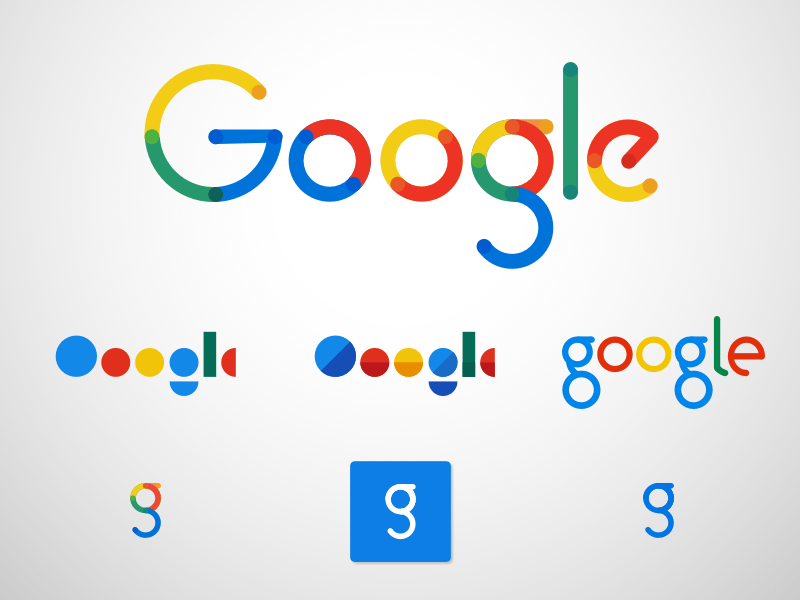
Last year we introduced Material Design to help designers and developers embrace an expanding, multi-device, multi-screen world. With those considerations in mind, we are excited to share a new brand identity that aims to make Google more accessible and useful to our users—wherever they may encounter it. This year marks the most remarkable change they’ve ever made with the Google logo. The distinctive colors remain the same, but the typeface of Product Sans matches the more modern and minimalist designs trendy nowadays. This design is Google’s first visual that designer Ruth Kedar professionally designed. The color scheme is used today with the added exclamation point in the end to compete with Yahoo!
History
Google Doodle Honors Harlequin Frame Inventor Altina Schinasi on Her 116th Birthday - ARTnews
Google Doodle Honors Harlequin Frame Inventor Altina Schinasi on Her 116th Birthday.
Posted: Fri, 04 Aug 2023 07:00:00 GMT [source]
By making the logic board thinner, this next-generation Apple Watch could fit additional components inside. Whether this manifests in a bigger battery or other components remains to be seen. Today’s supply chain rumor comes from Digitimes and says that a next-generation Apple Watch will use a new resin coated copper (RCC) motherboard design. Apple is believed to be working on “the biggest overhaul yet” to the Apple Watch’s design. A new rumor today indicates that the next-generation Apple Watch could include a design change that frees up more space inside for other components – or that makes the device thinner. This year, 26 students from Lowe’s Grove Middle School participated, with graduate and undergraduate Duke students providing support throughout the event.
The logo must never be used in a way that implies an endorsement or affiliation with Google where such a relationship does not exist, such as being featured on the cover of a book or in a TV commercial. If you want to create your own logo, you can use HubSpot's Free Logo Maker. Google has continued to embrace doodles with a verified Twitter account devoted to updating its audience about newly-published doodles. She started with a mostly black logo using the Adobe Garamond typeface. She also removed the exclamation point that was in the original logo.
Google finally gave this logo the shove in May 1999, perhaps deciding that it was just a bit too 'Yahoo! Just type 'Google in 1998' into the search engine for a surprise treat. Cultural borders became transparent thanks to the Internet in the first place. This world of pop-culture is governed by mega-corporations which began as very simple ideas.
The typeface design takes cues from that same schoolbook letter-printing style, but adopts the neutral consistency we’ve all come to expect from a geometric sans serif. This allows us to maintain an appropriate level of distinction between the Google logotype and the product name. The character set is complete with numerals, punctuation, accent and alternate characters, fractions, symbols, and supports extended Latin, Greek, and Cyrillic.
Keeping the brand essence of the Rivian brand
Kedar produced several different concepts for the new version of the logo. Many of them used imagery to express core components of the Google experience, such as a target to evoke its precision or a magnifying glass to signify that it was indeed a search engine. The very first version of the Google logo was never going to win any design awards.
They then changed their business name into something more refined – Google, a misspelling of the word “googol,” which means ten, raised to 100. It’s most likely the latter, and today, we’re here to talk about it, specifically Google’s famous logo design. Dive with us into the intriguing revision process that the Google logo has gone through over the years.
Throughout the past two decades, the Google logo has been iconic and easy to recognize. And across all of its evolutions, it has stayed misleadingly simple. With stats like this, it's not unlikely that the average person might see the Google logo anywhere from one to 30 times per day. Yet, in the end, it was a minimalistic version that won the hearts of Google's founders. Closer to the original, but with a sophisticated 3D twist, the design embodied Google's blend of innovation, simplicity, and accessibility.
The evolution of Google logo design is a rich tapestry that offers valuable insights into design methodologies, branding strategies, and cultural reflections. It's a case study that goes beyond mere aesthetics, revealing lessons in adaptability, collaboration, and intelligent design choices. As graphic designers, we can take inspiration from this journey, appreciating the subtle art of evolving a brand while maintaining its essence. In a rapidly changing digital landscape, the Google logo stands as a symbol of timeless design that continues to inspire and engage. The journey of Google's logo design is a fascinating exploration of creativity, innovation, and adaptability. Spanning over two decades, the Google logo design has transformed and adapted to the digital era's changing dynamics.
By typing a few words you hope to have access to all the answers, so you won’t miss the perfect answer for you. It is true that we looked at other fonts but what cinched it for us was the visual impact of the Catull letterforms when spelling out the word “Google” – the result was unlike anything out there. “We actually took a “needs finding” trip around Lowe’s Grove,” Kyle shared.
This change made the logo more modern and visually appealing but also helped to make it more legible and easier to read in small sizes. In 1999, the Google logo underwent a significant redesign that departed from the previous 3D design. The new logo featured a simplified 2D shape, making it look sleeker and more modern. The company also switched to a new typeface, the serif Catull BQ, which featured elegant solid lines and sharp serifs.


No comments:
Post a Comment